Our Blog

September is Self-Improvement Month!

September 5th, 2018

These days, Americans everywhere are putting greater emphasis on health and self-improvement, and more people are seeking orthodontic treatment to improve their smile. September happens to be Self-Improvement Month, and our team at our office knows that orthodontic treatment is an investment in self-improvement that will provide benefits for a lifetime. Recent advances in orthodontia now make treatment more comfortable for many interested in obtaining that beautiful smile.

Not only does orthodontic treatment give you a beautiful smile, it can also benefit your dental and general health. If teeth are poorly aligned, removing plaque and tartar by brushing and flossing may be difficult. A bad bite may result in fractured or excessively worn tooth surfaces, and the extra stress caused by a bad bite may even result in problems with your jaw joints.

If you’ve been thinking about getting that perfect smile, Dr. Mark L. M. Powell would love to have you visit for an initial consultation. Please give us a call to schedule a visit! See you soon!

Toothbrush Care

August 29th, 2018

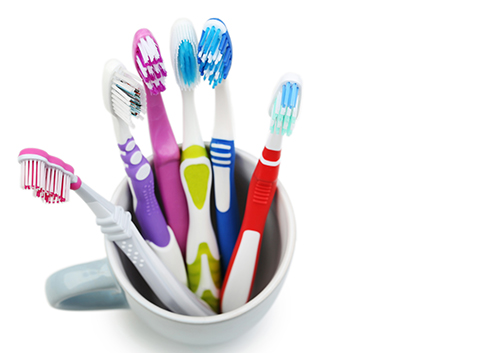
You found the perfect toothbrush! The bristles are soft, to avoid irritating your delicate gum tissue. The angle of the bristles is perfect for removing plaque. The handle is durable and comfortable when you spend at least two minutes brushing in the morning and two at night. Why, you love this toothbrush and you’ll never let it go… for the next three or four months.

The life of a toothbrush is naturally a short one. Dr. Mark L. M. Powell and our team recommend replacement every three to four months because the bristles become frayed and worn with daily use. They cannot clean as effectively when the bristles begin to break down, and, depending on your brushing style, may wear out even more rapidly. (Children will probably need to replace toothbrushes at least every three months.) But even in the short time you have your toothbrush, there are ways to keep it ready for healthy brushing.

  • Don’t share. While sharing is normally a virtue, sharing toothbrushes can lead to an increased risk of infections, especially for those with compromised immune systems or existing infectious diseases. Similarly, keep different brushes separate when drying to avoid cross-contamination.
  • Rinse thoroughly after brushing. Make sure to remove any toothpaste or debris left after you brush.
  • Store the brush upright. Air-drying is the preferred way to dry your brush, as covering the brush or keeping it in a closed container can promote the growth of bacteria more easily.

There are several products on the market that promise to sanitize your brush. The verdict is still out on its success, but if you or someone in your home has a compromised immune system, call our Jenison, MI office to see if it might be worth your while to check them out.

Even though your toothbrush won’t be with you long, make its stay as effective and hygienic as possible. And if you find a brush you love—stock up!

Caring for Your Dog’s Teeth

August 22nd, 2018

It may come as a surprise to learn that dogs, like humans, have both baby and adult teeth. Most dogs, unlike humans, have all of their adult teeth by the time they are seven months old, so it’s time to start looking after their dental health when they are still puppies.

While dogs generally don’t develop cavities, periodontal disease is the one of the most common diseases affecting dogs. Periodontal disease starts when the bacteria in your pet’s mouth form plaque. The plaque can harden into tartar, and, if plaque and tartar spread under the gum line, can be responsible for a number of serious problems. Veterinarians warn that tooth loss, tissue damage, bone loss and infection can be the result of periodontal disease. Professional dental treatment is important if your dog is suffering from periodontal disease, and your vet can describe the options available to you. But the time to act is before disease develops. Let’s bone up on some preventative care!

Brushing

There are brushes and toothpastes designed especially for your dog. Train your puppy from an early age to open his mouth to allow you to examine his teeth and gums. (This will also come in handy if you ever need to give him medicine.) Most dogs will accept brushing, and toothpastes come in dog-friendly flavors. Human toothpaste should never be used because it contains cleaners and abrasives that should not be swallowed by your pet. There are also dental wipes available that can be used once and thrown away. Your vet can advise you how to ease your pet into a brushing routine.

Gels and Rinses

Whether you rub an antiseptic gel on your dog’s teeth or squirt an antiseptic rinse into his mouth, these formulas can reduce the build-up of plaque. Not all dogs take to the taste of these solutions, but in general they are safe and effective. Ask your vet for recommendations if you would like to try this method.

Diet

Several dietary products offer anti-plaque ingredients or a kibble shape designed to reduce the formation of plaque. Talk to your vet for the best possible diet and nutrition suggestions for your unique pet.

Chew Toys

Chewing can help reduce plaque build-up if done consistently, and chew toys should be chosen for tooth and digestive safety. Some animal-based products and hard plastic toys are so rigid that they can cause damage to teeth or gums, so be sure to look for safe toys.  Dogs shouldn’t be left alone with toys due to choking or swallowing hazards—if the chew toy becomes small enough to cause choking, or your dog is swallowing large chunks that might not be digestible, time to replace it.

Your veterinarian is the best resource for maintaining your dog’s health and developing a dental routine both you and your pet can live with. When your four-legged friend goes for his next check-up, ask your vet what you can do to keep him and his smile fetching for a long, long time.

Invisalign® and Invisalign Teen® Make You Smile

August 15th, 2018

Many adults and teens in our Jenison, MI office would love to have their teeth straightened but are unwilling to go through the long and often embarrassing process of wearing traditional metal braces. Invisalign® and Invisalign Teen® clear aligners offer the perfect solution: They’re the most advanced clear aligner systems in the world!

If you’re considering getting braces, there are several reasons why you might want to consider Invisalign clear aligners. Here are some of them:

  • You can eat whatever food you like, without worrying about it catching in wires or breaking brackets.
  • People won’t likely be able to tell you’re wearing them!
  • The aligners can be removed at any time.
  • You can brush and floss as you normally would, which helps to maintain better overall oral health.
  • Invisalign aligners are made of a smooth BPA-free plastic and are more comfortable to wear than traditional braces. You’ll need to visit our Jenison, MI office less often: only once every six weeks or so.
  • With Invisalign Teen, you’ll receive up to six replacements for lost or broken aligners.

Before starting treatment, you’ll have a consultation with Dr. Mark L. M. Powell to see if Invisalign or Invisalign Teen treatment is right for you. After that, you’ll have X-rays, pictures, and impressions taken of your teeth.

That information will be used to make the 3D models of your teeth that let Dr. Mark L. M. Powell see how they will move throughout the entire treatment and approximately how long it will take.

You’ll receive your aligners based on the treatment plan we recommend. You’ll get a new set of aligners every two weeks. All you need to do is wear your aligners 22 hours a day and you’ll be on your way to a straighter smile in no time!

Ask a member of our Jenison, MI team for more information about Invisalign clear aligners today!