Our Blog

How long does orthodontic treatment take?

August 6th, 2015

The dental procedures that focus on the correction of alignment and bite are known as orthodontic care. With the aid of braces, aligners, retainers, brackets, and similar appliances, orthodontic treatment can correct oral disorders such as protruding teeth, crowding, difficulty biting or chewing, and speech issues. Seeking orthodontic treatment at our office can drastically improve your oral appearance, comfort, and health, while also encouraging proper oral hygiene and enhanced self-esteem. Both growing children and adults with oral alignment issues can benefit greatly from completing customized orthodontic treatment with Dr. Mark L. M. Powell.

Due to the uniqueness of each mouth and the severity of each malocclusion disorder, there is no one set timeframe for orthodontic treatment. The length of your treatment is determined by many factors, including the severity of your alignment issue, your age, the health of your teeth, and the specific orthodontic procedure you need to undergo. Nevertheless, typical treatment usually takes between 12 and 36 months.

Avoiding alignment issues

While some alignment issues are brought on by unavoidable matters such as accidents, genetics, and physical disorders, some issues arise out of certain actions you should not be doing. Finger sucking and improper oral hygiene are the two most common self-inflicted reasons for alignment issues. Constant finger sucking can alter the pattern in which your teeth grow, which in turn may cause bite issues. Improper oral hygiene such as infrequent dental visits and improper brushing and flossing can lead to decay and loss of teeth, which will interfere with the bite in your mouth.

To avoid advanced alignment issues, it is important to establish a relationship with a quality dentist when you’re young and seek orthodontic treatment at the first sign of alignment problems to encourage healthy and straight teeth for a lifetime.

For more information about orthodontic treatment, or to schedule a consultation with Dr. Mark L. M. Powell, please give us a call at our convenient Jenison, MI office!

How to Floss with Braces

July 30th, 2015

The our office team knows that oral hygiene is important, whether you have braces on your teeth or not. But if you are a person who wears braces, caring for your teeth and gums can become somewhat challenging. Without daily oral hygiene practices, you may become prone to cavities and tooth decay during your time in braces.

Naturally, you know that brushing your teeth each morning and night, as well as after you eat, will help keep your mouth healthy and clean during the months you wear braces. But flossing is also an important part of your hygiene routine. Flossing with braces can be tricky, but it’s not impossible. Dr. Mark L. M. Powell, your general dentist, or your dental hygienist can help you become more comfortable and adept at flossing your teeth during the months you wear braces.

Flossing Tips for Those with Braces

  • Use Tools Provided by Our Office. A floss threader is a small, plastic needle that will help you floss between the wires and your teeth. Thread a 12-to-18-inch piece of floss onto the needle, and use the needle to get the floss easily behind the wires.
  • Flossing Under the Wires. Once the floss is behind the wires, use your hands to manipulate the floss. Move it up and down along the wires to remove food particles.
  • Flossing Between Your Teeth. Floss between your teeth as you normally would without braces. Move the floss up and down between your teeth, using a clean section of floss for each tooth.
  • After You Finish Flossing. Your orthodontist may have suggested that you use a water pik or proxy brush after you finish brushing. Either of these tools will help remove any loosened food particles to ensure that your teeth and braces are clean.

Continue Good Oral Hygiene Habits

Good oral hygiene habits you use while wearing braces will help you achieve the beautiful smile you and the our office team have been working toward. Once your braces are off, it may be tempting to slack off on the brushing and flossing. Don’t let yourself fall into any habits that will have a negative impact on your oral health or the attractive smile you waited for throughout the months you wore braces. See your general dentist for regular cleanings, and continue to brush and floss your teeth each day.

Looking Back at the Old Days of Braces

July 23rd, 2015

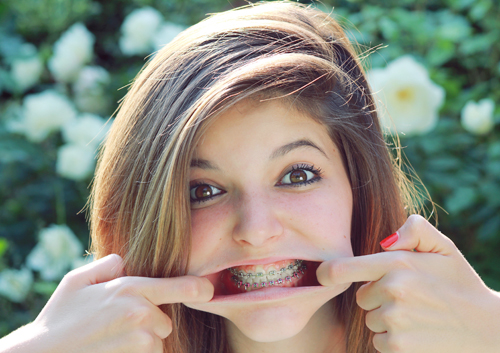
Braces can be painful, but if you are a teen who loves being social, the worst part about them can be their look. They show up in your photos, and you will not be able to take braces-free photos for several months, or even years. The time will pass, though, and your teeth will be the better for it. In the meantime, consider the other people who have survived braces.

Plenty of People Get Braces

There are many reasons for getting braces:

  • Correct an overbite or underbite
  • Straighten teeth
  • Fix poorly-spaced teeth

With so many possible ways to get braces, it’s no surprise that they are so common.

Find Out Who Had Braces

The long lists of celebrities who had braces as teenagers or even adults can give you the comfort of knowing you are in good company. Even better, these lists provide visible proof that there is life on the other side of braces. Actors and actresses on the Cosby Show, Scrubs, and Ugly Betty, as well as tennis star Martina Hingis and Miss America 1975, Shirley Cothran, had braces. Ask your parents. If they didn’t have braces, there is a good chance that some of their siblings did.

Benefits of Braces

Wearing braces can make your life a lot better in the future. Your teeth will be more attractive, and your smile will shine through in photos of you. Straight teeth are not just about looks, though. They can prevent a variety of health problems, such as caries, gum disease, speech impairments, and trouble chewing. Be patient, and the benefits of braces will come.

What is dentofacial orthopedics?

July 16th, 2015

You may have noticed that we specialize in orthodontics and dentofacial orthopedics. And while most people we talk to have heard of orthodontics, many are confused by the dentofacial orthopedics part of the title. Today, Dr. Mark L. M. Powell and our team thought we would explain the difference.

While orthodontics entails the management of tooth movement, dentofacial orthopedics involves the guidance of facial growth and facial development, which occurs for the most part during childhood, and is a reason why kids are often the best candidates for receiving dentofacial orthopedic therapy. Dr. Mark L. M. Powell will examine and monitor your child’s growth to determine when starting treatment will be most effective. If your child begins orthodontic treatment before his or her adult teeth have erupted, it is known as Phase-One treatment. During this phase, Dr. Mark L. M. Powell will use treatments designed to correct your child’s jaw growth and make sure that the jaw bone is properly aligned before beginning the next phase of treatment, which usually involves placing braces to straighten your child's teeth.

Dentofacial orthopedics is also used to treat adult patients at our office, however, this process may involve surgery. With our younger patients, we know the jaw bones are still forming, making it easier for our team at our office to control bone growth and tooth movement. Adults, however, are a different story; their bones are no longer growing, and their jaw bones have hardened, so it is more difficult to adjust the bite and move teeth into proper alignment. Dr. Mark L. M. Powell may recommend surgery to adjust the jaw bone and establish the proper bite alignment before beginning treatment.

Because our team at our office is skilled in both areas, we are able to diagnose any misalignments in the teeth and jaw as well as the facial structure, and can devise a treatment plan that integrates both orthodontic and dentofacial orthopedic treatments.

We hope that helps! To learn more about dentofacial orthopedics, and to find out if this type of treatment is right for you, please contact our Jenison, MI office and schedule an initial consultation for you or your child. It’s never too late to get a great smile, and we can’t wait to help you or your child get started.