January 13th, 2015

When a child is born, he or she will have 20 primary teeth and 32 permanent teeth. But sometimes kids are born with additional teeth, and our team at our office calls this oral condition "hyperdontia." Primary teeth are the first set of teeth that erupt in your child's mouth, typically by the time they are 36 months old, and are shed by the time your child reaches the age of 12. Permanent teeth then take the place of the primary teeth and are usually fully-erupted by the time your son or daughter reaches 21 years of age. Anyone who develops more than 20 primary teeth or more than 32 permanent teeth has hyperdontia, and the additional teeth are referred to as supernumerary teeth.
While the cause of hyperdontia is not entirely clear, it is believed that there may be a genetic factor. Oral professionals have found that patients with extra teeth often have syndromes like cleidocranial dysplasia, Ehler-Danlos syndrome, Gardner syndrome, or cleft lip and palate. The prevalence of hyperdontia affects between one and four percent of the population in the United States, and the majority of cases are limited to a single tooth.
So, what is the best way to deal with hyperdontia? It really depends on the case. The treatment plan your doctor suggests varies according to the potential problem posed by the supernumerary teeth, as well as their type. Orthodontic treatment may certainly may help, but extraction can also be a good option. We recommend that children receive an oral evaluation or checkup no later than the age of seven. In addition to hygiene evaluation, this helps ensure your child does not experience hyperdontia problems.
If you suspect you or your child may be suffering from hyperdontia, please give us a call to schedule an appointment at our convenient Jenison, MI office to be evaluated.
January 8th, 2015

Your first few days with braces will feel rather odd, awkward, and even painful. The day you get your braces you will probably just feel weird, like you have something in your mouth – because you do. You are most likely to feel pain and soreness during the second and third days. After that, you should be fine. If you experience any pain with your braces, there are a few things you can do to get some relief.
Home Remedies
Rinsing your mouth with warm salt water will soothe it and promote healing. Rinse several times a day or when your mouth, particularly mouth sores, are hurting. You can also take some Tylenol every four hours. Dr. Mark L. M. Powell and our team advise against products that contain ibuprofen because it slows down the movement of your teeth.
You can also eat cold foods like ice cream or yogurt. The cold of the food will help dull the pain. Ice packs applied to your mouth help as well. You can also swish ice water around your mouth, but DO NOT eat ice!
Cool Products
Products for canker sores can be applied to the mouth sores you develop from your braces. There are also various rinses you can use that act as a shield or barrier in your mouth, and protect your mouth sores from further irritation.
Dr. Mark L. M. Powell and our team may have given you some dental wax to put on the abrasive areas of your braces to protect your mouth. Putting dental wax on the brackets creates a barrier that keeps your mouth from getting scraped and sore.
Bite wafers are another great pain relief too. When you bite down on the wafer, it increases circulation in your gums, which can ease the pain a bit. Just a little pressure will work; you don’t want to bite too hard. And they usually come in cool colors, too!
The pain won’t last forever. One day you will wake up and you won’t have any pain. In fact, you probably won’t even notice the braces in your mouth at all!
January 1st, 2015
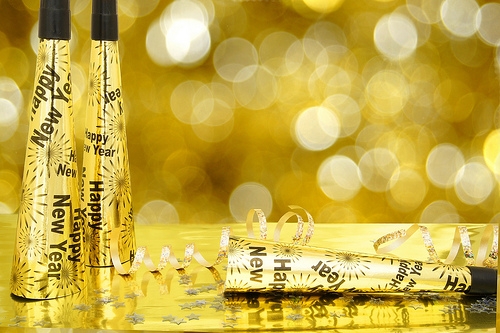
Watching the clock tick down the final seconds until midnight, many of us- our office included- feel nostalgic about the passing year and hopeful about the new one to come. New Year’s Eve is one of the most widely celebrated holidays in the world, with over-the-top celebrations taking place in dozens of countries. The Gregorian calendar, which is widely used in Western nations and around the world, was implemented in 1582. Since that time, December 31st has marked the final day of the year, with midnight heralding the beginning of a brand new year. In the United States, New Year’s Day is a public holiday; government offices, schools, public organizations, and many businesses are closed for the day. Ponder the following fun facts as you think about your plans for the holiday:
- Approximately one billion people watch the New Year’s Eve ball drop in Times Square, New York City. This televised event is one of the most iconic New Year’s celebrations in the world. For many years, watching the ball drop meant tuning in to Dick Clark’s Rockin’ New Year’s Eve, an iconic television special dear to the hearts of many viewers.
- The idea for the New Year’s Eve ball came about because of a citywide ban on fireworks. Before 1907, when fireworks became illegal in New York City, celebrations included an elaborate fireworks show. The large, glittering, illuminated ball was developed as an alternative. Although the first ball was heavy at 700 pounds, the modern New Year’s Eve ball is made of Waterford crystal and tips the scale at six tons!
- The top five New Year’s resolutions are: to lose weight, quit smoking, get a new job, return to school, or increase personal savings. However, approximately 88% of New Year’s resolutions fail. But don’t let that discourage you! Resolutions are most likely to succeed when they are clear, achievable goals. Setting out a concrete plan to achieve your resolution also boosts your chances of success.
- Eating black-eyed peas on New Year’s Day is said to bring good fortune in the new year. Collard greens, cabbage, and ham hocks are also considered lucky foods to enjoy. Just steer clear of the chicken or turkey dinners; eating poultry is a bad omen for the year to come.
Whether you plan to stay in Jenison, MI, or head out into the crowds to watch the ball drop in Times Square, New Year’s Eve is a time to enjoy friends and family. Send your loved ones well wishes for the New Year, and look for that special someone to share a midnight kiss with for good luck!
December 25th, 2014

So you’re about to get braces. Congratulations! You are taking a very smart step to improve the health of your teeth as well as get that killer smile in shape. But, as with anything that is good for you, there are a few things you will have to avoid while you “do your time.”
Some foods don’t do so great with braces. The foods listed below should be avoided while you are wearing your braces because they can pop the brackets and bend the wires. In other words, these foods can really ruin your day, and send you back to our office to get your braces repaired.
So before you hit the chair, hit the grocery and candy store – one last time – for:
- Beef jerky
- Raw carrots
- Taffy
- Pizza crust
- Bagels and other crusty bread
- Popcorn
- Hard candy
- Nuts and seeds
Dr. Mark L. M. Powell and our staff will give you more information about eating with braces. Some foods, such as apples, are okay as long as you cut them in pieces first. Others, like pudding and pasta, are fine just as they are. But then there is “the list”: the foods that are a big no-no and should be avoided. It won’t be forever, so hang in there.
Your braces time will pass before you know it and you can resume more normal eating. But before the braces go on, enjoy these tasty treats. Go ahead and indulge!


 Website Powered by Sesame 24-7™