Our Blog

Invisalign® vs. Traditional Braces

November 20th, 2014

A great smile can go a long way. Scientific research suggests that people who smile are perceived as more attractive and confident than those who don’t flash their pearly whites. When it comes time to invest in orthodontics to improve your beautiful smile, choosing the best option can be daunting. Comparing Invisalign to traditional braces is a great way to determine what orthodontics make most sense for your unique smile.

How is Invisalign different?

Unlike traditional braces, in which brackets are affixed onto each tooth and connected by wires Invisalign corrects orthodontic problems using a set of clear trays. These trays are specially formed to fit your teeth, allowing you to wear them 24/7.

Aesthetics

One of the primary advantages of Invisalign is that the clear trays are nearly invisible. Particularly for adults self-conscious about appearing professional with traditional braces, Invisalign can correct orthodontic issues without capturing the notice of others. Their nearly invisible appearance is one of the topmost reasons that orthodontic patients choose Invisalign.

Complexity of the Orthodontic Problem

Invisalign works well for people who have relatively minor problems, such as crooked teeth or small gaps between teeth. For more complex problems, particularly issues with bite or vertical problems (i.e., one tooth being significantly higher than another), traditional braces may be better at pulling teeth into alignment.

Eating and Drinking

Invisalign trays are removable, meaning that you cannot eat or drink while wearing them. Unlike traditional braces, however, you are not limited in the foods you may eat. Chewy, sticky, or hard foods may be eaten, provided that you brush your teeth before reinserting the Invisalign trays.

In the end, only you can weigh the pros and cons of Invisalign versus traditional braces. Consult with Dr. Mark L. M. Powell to understand how these orthodontic interventions may work for your unique situation.

Are braces ruining your photos?

November 13th, 2014

While it’s normal to feel self-conscious, there is no reason to avoid photos just because you wear braces. Many people wear braces and you do not need to be embarrassed about them. There are also ways you can enjoy your photos without hiding your smile.

Make it Fun

Dr. Mark L. M. Powell and our staff offer rubber bands for braces in a wide range of colors. Choose your favorite color and wear it with pride. You can mix and match your colors too. For Valentine’s Day, try alternating red and pink bands. For the Fourth of July, use red, white, and blue!

Bands are also available in neon colors and glow-in-the-dark designs. Your imagination is the only thing holding you back. You might want to avoid using dark green bands, though. It makes it look as though you have broccoli stuck in your teeth. Gross!

Make them Disappear

If your braces still really bother you in photos, technology can quickly solve the problem. A photo-editing program, or even a simple paint program, can easily erase your braces. Zoom in on your teeth, pick your natural tooth color with the dropper, and paint your braces away.

If you have a significant amount of metal in your braces, try to avoid close-ups with flash. The flash can reflect off the metal. The important thing to remember is how good your teeth will look and feel once your orthodontic work is complete. Dr. Mark L. M. Powell and our staff can also show you options for braces that are not as visible as the traditional style.

Foods that are Safe for Braces

November 6th, 2014

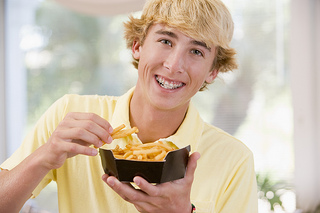
Orthodontic braces are used to straighten the teeth, which not only creates a more pleasing appearance, but also helps prevent tooth decay and other oral health problems. Braces are only effective when they are properly cared for, however. Certain foods, for example, are better suited for individuals who have braces, as opposed to hard and sticky foods that can cause damage. So, what types of foods should you or your kids eat to protect dental appliances?

The best foods to eat with braces are those that are not high in sugar and do not require excessive chewing. For breakfast, try eggs, yogurt, bacon, wheat toast, or oatmeal. Lunch may steer toward a banana rather than an apple, a salad without nuts, and a glass of water. If you are looking for some after-school snacks for your kids, consider baked tortilla chips with salsa and guacamole, or try string cheese with fruit.

A healthy dinner can include most types of vegetables, so long as they are cooked to an appropriate softness. Pair that with a lean protein, such as fish or chicken, and follow up with dessert. Just be sure to brush afterward!

Post-Tightening Foods

As braces begin to adjust the alignment of the teeth, our team at our office will periodically tighten them to continue the alignment process. After tightening occurs, the teeth may be sore and sensitive to certain foods. During this time, it is best to eat soft foods. Examples include:

  • Pudding
  • Mashed potatoes
  • Soup
  • Ice cream
  • Cottage cheese
  • Peas
  • Pancakes
  • Pasta

Foods to Avoid

Anyone who wears braces – whether fixed or removable – should avoid excessive snacking and should aim to eat a healthy and balanced diet. It is also important to avoid foods that could cause damage to the braces, such as:

  • Hard candies
  • Gum
  • Nuts
  • Popcorn
  • Certain raw vegetables (for example, carrots)

Considerations

Regardless of what types of foods you eat with braces, it is important to keep the crevices between the teeth and around the braces very clean. That means brushing and flossing after meals to prevent the build-up of plaque and decay. Not only can failing to do so damage the teeth, but it can also cause discoloration.

Have more questions about orthodontic treatment? The our office staff is always ready to answer all of your questions and help you get the most out of the treatment plan prescribed for you by Dr. Mark L. M. Powell!

Halloween Fun with Braces

October 27th, 2014

Halloween is a favorite holiday among children due to the festive games, imaginative costumes, and candy. Modern celebrations stem from a combination of traditions from Pagan and Christian traditions throughout the centuries. The original holiday was called Samhain and derived from the ancient Druids of Ireland. In their belief system, November 1st marked the beginning of winter, and Pagans began their Samhain celebrations at sunset on October 31st.

Modern Celebrations of Halloween

Children and adults love dressing up for Halloween, and this tradition comes from the ancient belief in spirits. From sunset on October 31st until sunrise on November 1st, the souls of the dead entered the physical world. Some spirits were benevolent and wanted only to cross over to the afterlife while others harbored malicious intents of revenge and trickery. Pagans wore masks and disguised themselves so that the malevolent souls would mistake them as fellow spirits.

Families left food and ale outside of their doors to appease the spirits. With the rise of Christianity in Europe, the church encouraged its members to offer food and money to beggars. In exchange, the beggars would agree to pray for the family's deceased loved ones. Eventually these traditions led to the development of today's customs where children dressed up and received candy from their neighbors while circling the community.

Teeth-Friendly Treats

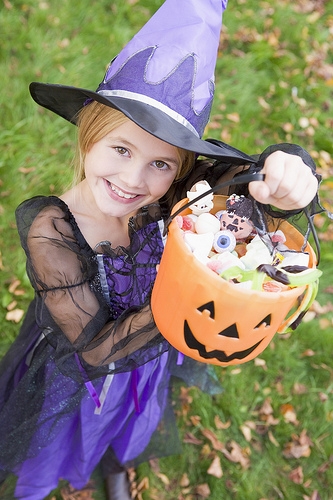
With all of the excitement and free candy on Halloween, it is easy to get carried away on a sugar high. Parents warn their children not to eat too many pieces in one night to avoid tummy aches and cavities. Our team at our office especially wants to remind children with braces to be extra cautious about the treats they eat because some varieties can get stuck in between the brackets and damage the devices. Sticky candy, such as caramels, fruit chews, and gum should be avoided when wearing braces. Children can trade with their friends and siblings to get only safe candies. The following list offers some alternative treats that children with braces can safely enjoy.

  • Solid chocolate, including milk, white, or dark
  • Nougat-filled candy bars, such as Three Musketeers
  • Candy-coated chocolates like M&Ms
  • Powdery candy, such as Sweet Tarts or Pixie Stix
  • Mint-flavored candy
  • Malted milk balls
  • Cookies
  • Peanut butter crackers or cookies

When in doubt, children should ask their parents or Dr. Mark L. M. Powell if a specific candy is safe. Halloween is a fun holiday for children, and having braces does not have to take away any of the excitement from tasty treats.