
Our Blog

Heading Back to School? Save Some Room in Your Backpack!

August 3rd, 2022

If you’re heading back to classes in the next few weeks, you’re probably getting your gear together now. So let’s talk about some of the items you can pack to make orthodontic care easier during school hours.

  • Dental-Healthy Food

Watching what foods you eat is especially important now. If you’re carrying your lunch or snacks in your pack, you want to be sure that they’re approved for braces and aligners.

If you wear braces, avoid foods which are sticky, chewy, or crunchy. They can stick to your teeth (making it easier for cavities to develop) or cause damage to your brackets and wires (making repairs necessary). Your orthodontist will give you a list of braces-friendly foods.

If you have clear aligners, even though you’ll remove them to eat, that sticky rule still applies. You don’t want food trapped in your aligners if you can’t brush right after eating, because that food is also food for the oral bacteria which cause cavities.

Bringing a water bottle with you is a great idea if it’s hard to brush after eating. Rinsing with water is a good way to get rid of loose food particles, and staying hydrated helps maintain normal saliva production—which also helps wash away food debris.

  • Toothbrush, Toothpaste, and Floss

It’s best to clean your teeth after every snack and meal if at all possible. A travel-sized brush, toothpaste, and dental floss or picks designed for braces will help you get rid of any unwanted dental leftovers. And a small mirror can help you discover any lingering food particles.

It’s especially important now to practice careful hygiene, so be sure to wash your hands before and after cleaning your teeth or appliances.

  • Your Aligner or Retainer Case

Whenever you take off your retainer or aligners to eat, you should always have your case handy. Cases make sure your appliances stay off germy desk and table surfaces—or worse, floors—and protect them from breakage. A case is also a good way to make sure your retainer doesn’t accidentally end up in a trash bin after lunch.

Again, before and after you handle your braces, aligners, or retainer, be sure to wash your hands carefully.

  • Dental Wax & Extra Bands

Sometimes a wire comes loose or a bracket irritates the inside of your cheeks or mouth. In this case, dental wax is a great way to protect yourself from irritation and injury. And if a band is lost or breaks, it’s always good to have a spare (or two) handy. As always, handwashing rules apply!

  • Your Mouth Guard

If your afterschool activities involve contact sports, a mouthguard is always a good idea, and especially when you wear braces. Dr. Mark L. M. Powell can create a custom guard which will protect your teeth, your delicate mouth tissue, and your braces from many impact injuries.

  • Your Orthodontist’s Phone Number

One important item that takes up almost no space in your backpack, locker, or phone is the phone number for our Jenison, MI office. If your braces are damaged, or if your aligner or retainer is lost or broken, we will let you know what to do until you can safely visit the office in person.

Talk to our team about how to care for your braces or aligners while you’re at school, and talk to your school about how you can manage your dental care safely during school hours.
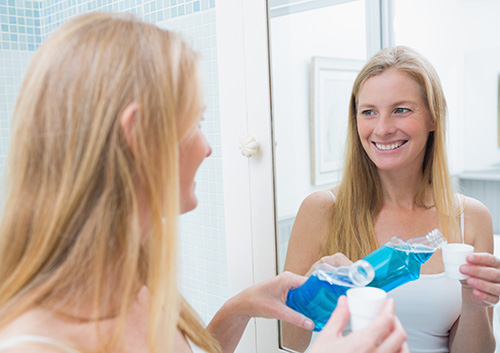

Can I use mouthwash instead of flossing?

July 27th, 2022

While mouthwash goes a long way in improving your oral care, it is not a substitute for flossing. Mouthwashes and flossing provide different benefits that you should understand.

Mouthwash Benefits

Mouthwash comes in two categories. Some are considered cosmetic. This type of rinse provides temporary relief from bad breath and has a pleasant taste. These do not actually kill any bacteria.

Therapeutic mouthwashes provide the healthier benefits. These may contain different ingredients including fluoride or antimicrobial agents. This type is used to remove plaque buildup and reduce the potential for calculus formation. Therapeutic rinses can also help prevent cavities, bad breath, and gingivitis. In addition, Dr. Mark L. M. Powell can prescribe special rinses to assist patients after periodontal surgery or other procedures.

Flossing Benefits

Flossing is what removes the plaque formation before it can harden and become calculus. While a rinse reduces buildup, only flossing will fully remove plaque, especially between teeth. The bristles on a toothbrush do not get between teeth completely. If plaque is not removed, it hardens into tartar or calculus. When this builds below the gum line, gum disease can start.

Types of Floss

Floss is available in a thin string form or a tape. It can be waxed or unwaxed. If you find flossing difficult, you might want to try a different type of floss. You can buy bulk floss in containers or purchase the disposable type with a plastic handle attached. This style can be easier for many individuals to use. Interdental picks are available for bridgework or other situations where regular floss cannot be used.

If you have questions regarding the best mouthwash or floss, or need tips for easier flossing, please ask our Jenison, MI team for advice. We will be glad to give you solutions to help keep your mouth clean and healthy.

Keeping It Clean—Better for Your Retainer, Better for Your Oral Health!

July 20th, 2022

Now that you’ve graduated from your braces or aligners, you might think you’re finished with orthodontic cleaning tips. Not quite yet! Your retainer needs love, too—not just because it can look or smell “less than appealing” without your help, but because it’s good for your dental health.

Removable Retainers

If you have a Hawley retainer or a clear retainer, cleaning it whenever you remove it is a great idea. Unappetizing white patches mean plaque or mineral deposits from your saliva have dried and hardened on your retainer’s surface. And if you notice an unpleasant taste or odor, it probably means that germs and bacteria have made themselves at home and are growing in and on your appliance.

You don’t want old plaque or new bacteria in your mouth! Here are some ways to keep your retainer clean and fresh:

  • After wearing it, you can clean your retainer with a toothbrush, but don’t brush too vigorously. You might scratch it. Use a soft or even extra-soft brush to clean out all the nooks and crannies, and then rinse.
  • Use cleaning products which have been recommended by Dr. Mark L. M. Powell if your retainer needs a deeper clean. Denture cleaners, retainer cleaners, and even toothpastes can be too abrasive or cause discoloration, so use the products made for your specific retainer.
  • Let your retainer dry before storing it in a dry place after cleaning. Shutting a damp retainer into a closed case provides bacteria with the damp, dark environment they thrive in. (PS—clean your case regularly, too!)
  • One of the benefits of a clear retainer is that it’s almost invisible. And you can help keep it that way by removing it whenever you eat or drink. Your retainer can become stained from colored foods or liquids.

Fixed Retainers

A permanent retainer is a small piece of wire that is custom-fit and bonded to the inside of selected teeth to keep them from shifting. Because food particles and plaque can accumulate around a fixed retainer, brushing after meals and at least twice a day is recommended. Bacteria and plaque cause bad breath, cavities, and tartar buildup, and removing tartar might require removing your retainer.

While a fixed retainer can be tricky to clean, there are techniques and products that make cleaning easier and more effective:

  • An orthodontic toothbrush with a smaller head might reach behind your teeth more comfortably.
  • Don’t forget to floss! Using a floss threader will help you get that wriggly floss behind the retainer and between your teeth.
  • Try a water flosser. These handy devices direct a stream of water right into hard-to-reach places for more thorough cleaning.

If you’re having trouble keeping your retainer clean, our Jenison, MI orthodontic team can teach you all you need to know about tools and techniques to keep your retainer—and your teeth and gums—healthy. An attractive smile is a great thing. A healthy, attractive smile is even better!

Top Ways to Ensure You and Your Braces Have a Good Relationship

July 13th, 2022

You and your braces will become good friends over the coming months or years, so it’s important to get your relationship off to a good start. Consider the following recommendations to prevent rocky times ahead:

  1. Floss, floss, floss. Yes, it’s a pain to floss around your braces, but it's the best way to prevent gum disease and other oral health problems. Ask Dr. Mark L. M. Powell and our staff for floss threaders to make the chore easier. Just a few minutes per day will ensure that you don’t face significant dental health issues when the braces come off.
  2. Avoid sticky or hard foods. It’s tough to forgo toffee, caramel, gum, and other favorite sticky treats, but your braces will thank you. Sticky or hard foods can break a bracket or wire, so it’s best to avoid them altogether.
  3. Chew with your back teeth. If you’re used to taking large bites with your front teeth, it might be time to switch your eating habits. Taking a large bite of food with your front teeth can leave your braces vulnerable to damage. Instead, cut large foods into pieces and use your back teeth to chew. This is especially important with corn on the cob, which should always be cut from the cob.
  4. Wear rubber bands and headgear. Rubber bands, headgear, and other orthodontic appliances may seem annoying, but failing to comply with wearing them can increase the length of your treatment by months. Wear them now to avoid problems in the future.