Our Blog

What is a palatal expander?

October 10th, 2018

Orthodontists like Dr. Mark L. M. Powell recommend a first orthodontic visit and evaluation for your child around the age of seven. We will evaluate your child’s jaw and facial development and make sure that there is enough room in the mouth for the permanent teeth when they arrive. One of the recommendations we might make for early treatment is the use of a palatal expander. If you are unfamiliar with this device, let’s take a closer look at why it’s necessary and what exactly it does.

Why do we recommend the palatal expander?

There are two dental arches, composed of the upper and the lower teeth, in your child’s mouth. This arch-shaped design is meant to accommodate all the permanent teeth. Further, when the upper and lower teeth meet, they should result in a healthy occlusion, or bite.

Sometimes, the upper dental arch is simply too small to accommodate all of your child’s permanent teeth, leading to crowding, extractions, and impacted teeth. Also, a too-narrow arch can result in a crossbite, where some of the upper teeth bite inside the lower ones. An improper bite can lead to problems such as TMJ (temporomandibular joint) disorder, improper wear and stress on teeth, certain speech difficulties, and other potential complications. The palatal expander was designed to prevent these problems from occurring.

What is a palatal expander and how does it work?

The expander itself is a device that increases the size of the upper dental arch. Before your child’s bones are finished growing, the space between the two bones of the upper palate is filled with cartilage. This tissue is flexible when children are young, but gradually fuses solidly into place by the time they are finished growing (usually in the early to mid-teens). If the arch can be widened to accommodate the emerging permanent teeth, or to reduce malocclusions, this improvement can also affect the need for, and length of, future dental work.

There are several types of expanders available at our Jenison, MI office. These are custom-made appliances, commonly attached between the upper teeth on each side of the jaw. The two halves of the device are connected with a screw-type mechanism that can be adjusted to widen the upper palate and dental arch with gentle pressure. This is a gradual process, with small adjustments usually made once or twice a day to slowly move the bones further apart. As weeks go by, you will notice a successful change in the spacing of the teeth. Your child might even develop a gap in the front teeth, which is normal and will generally close on its own.

If you would like more detailed information, talk to Dr. Mark L. M. Powell about the palate expander. We can tell you what to expect from this treatment if we think it is best for your child’s unique needs, and how to make it as easy as possible for your child. Our goal is to provide your child with the healthiest teeth and bite possible, always making use of treatments that are both gentle and effective.

Fall Holiday Guide for Braces

October 3rd, 2018

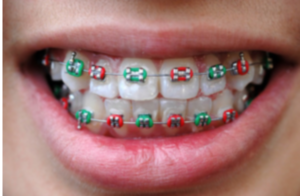
If this is your child’s first holiday season with braces, here are some tips on how to help children get the most enjoyment from these celebrations without compromising their braces or leaving them feeling left out of the festivities.

Halloween

When you think dental health, “Halloween” is not usually the first thing that comes to mind. Halloween can be tricky, but with some planning and intervention, you can make sure your child doesn’t miss out on the treats that make the holiday a favorite.

Braces present other challenges besides dealing with the scary amount of sugar in every trick-or-treat bag. Certain treats can be a challenge to clean from braces, and can even cause broken brackets and wires. How to avoid these frightful results?

  • Go through your child’s treat bag when you get home after neighborhood trick-or-treating. Anything which can damage braces, such as regular gum, candy with nuts or caramel, or hard or chewy candies should be discarded. Perhaps you and your child can choose a selection of soft candy such as plain chocolate and peanut butter cups to trade for those tricky treats. Your child’s favorite soft fruits, cupcakes, and cookies could also be safe substitutes.
  • Party time? Candy apples, bowls of candy corn, and popcorn balls are favorite treats at Halloween parties, but very bad for braces. Help your child recognize what should be avoided before attending, and suggest safe options like soft cupcakes.
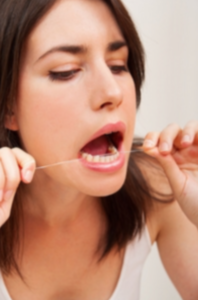
  • Finally, even safe treats will leave more sugar than normal in your child’s mouth and therefore more potential for plaque build-up. Brush and floss more often, if needed, and rinse regularly with water.

Talk candy guidelines over in advance with your child. If you’d like, Dr. Mark L. M. Powell can recommend safe alternatives. With your help, Halloween won’t be a fearsome experience for you or your trick-or-treater.

Thanksgiving

Now, this is a holiday to be thankful for! Almost all of your traditional favorites are perfect for family members with braces.

  • Appetizers: Offer soft food options such as silky cheeses and deviled eggs instead of crunchy vegetables, chips, and nuts.
  • Dinner: Turkey is a required dish on many tables, and no need to miss out! Just make sure pieces are bite-size and off the bone. Creamy mashed potatoes and gravy and jellied cranberry sauce are also braces-friendly traditions. Any cooked vegetable should be fine, but do cut the corn from the cob first. Dressing is a great side dish if your child avoids any crunchy tops and edges, as are soft, nut-free rolls and muffins.
  • Dessert: Pumpkin pie, cheesecake, and apple pie with ice cream are all safe (and delicious) choices. Leave the pecan pie, caramel sauce, and anything nutty or chewy off your child’s menu. And remember to brush and floss carefully after the feast!

If you are concerned that following the usual food guidelines might be a little more difficult during this time of year, talk to us. Dr. Mark L. M. Powell and our team are happy to suggest ways to make your child’s first holidays with braces memorable for all the right reasons. The last thing you’ll want is an emergency visit to our Jenison, MI office!

Generic Clear Aligners vs. Invisalign®

September 26th, 2018

You may have a talent for home repairs. You may be able to rebuild your computer. You may even be able to put together a whole room of furniture armed only with flat-box kits and an Allen wrench. But, please—don’t try do-it-yourself orthodontics!

Now that generic clear aligners are available, you might consider giving them a try to save some money. But is straightening your own teeth really a good idea? Before you are tempted, let’s look more closely at the products and the dental science involved.

Invisalign®

  • Invisalign clear aligners are used by orthodontists and dentists with experience in custom treatment for your smile. A 3D image of your teeth will be captured by the iTero Element® scanner. Using special software, your doctor can map out each projected shift in your teeth, and even show you a projection of your finished smile!
  • Your Invisalign aligners will be tailored to fit your teeth precisely using the 3D scan and 3D printing. They are made from SmartTrack® material, a product specifically engineered for a perfect, comfortable fit. Invisalign aligners are even trimmed to fit your individual gumline to prevent irritation.
  • When your first sets of Invisalign aligners arrive at our Jenison, MI office, Dr. Mark L. M. Powell will check for fit, answer any questions you might have about use and care, and let you know what to look for and what to expect. Your progress will be monitored with visits every six to eight weeks. (And for parents of teens, Invisalign aligners can offer blue “compliance indicators” to let you know they are being worn the 20-22 hours a day necessary for the best and fastest results.)

Generic Aligners

  • You might be required to make a putty mold of your own upper and lower teeth, which is not the easiest thing to do well, and to take selfies of your teeth.
  • The aligners will be sent to you in the mail. They are generally made of hard plastic with generic gumlines. There will be no one to tell you if the aligners fit properly.
  • They are sometimes less expensive because there is no in-person medical supervision. A dental professional working for the company will look at the model created from molds you submit, and recommend a series of aligners to correct the problems he detects by looking at the model and your selfies. This supervisor will not be able to assess the overall dental health of each patient to make sure teeth and gums are healthy and ready to start treatment, and will not be able to tell if the teeth are moving properly or improperly once the aligners are in use.

Finally, while generic aligners may potentially have some success in minor tooth straightening, they are not created to deal with complex bite issues or malocclusions.  In fact, using generic aligners with no supervision can cause more serious dental problems than a patient started with.

Sure, sometimes a do-it-yourself project turns out well. But your teeth and bones are too important for home improvement. When it comes to creating a beautiful, even smile and balanced, comfortable bite while making sure of your dental health, it’s always best to trust a professional like Dr. Mark L. M. Powell to provide you with gentle, tested, and successful care!

Is Invisalign® Right For You?

September 19th, 2018

When patients ask Dr. Mark L. M. Powell about who benefits from Invisalign clear aligners, the simple answer is this: almost everyone. Unlike conventional braces, they are removable, which makes eating and cleaning your teeth much easier.

They are molded to fit each patient’s mouth and are practically invisible. Because aligners apply less force in straightening teeth than metal braces, the risk of harm to your teeth is reduced.

Benefits to adults

Traditional braces are associated with children and teenagers. Many adults want to have their teeth straightened but hesitate to wear metal braces. They also worry about having to change their diet and not be able to eat the foods they normally enjoy.

If you are an adult who’s considering braces, our team at our office will tell you Invisalign aligners is a great option for discreet teeth straightening. Your teeth will be straightened with virtually invisible braces.

The aligners are easily removable when you eat, so you can enjoy any food you normally would consume. You simply clean your teeth normally after eating and you won’t have to worry about getting food stuck in your braces.

If there is a special occasion during which you do not want to have any braces in your mouth at all, you can remove the aligners for up to four hours without causing any damage.

Benefits to teenagers

Dr. Mark L. M. Powell and our team know that teenagers are often involved in sports and other after-school activities, and generally lead pretty busy lives. If your teen plays a musical instrument, you may be concerned that having metal in his or her mouth will interfere with ability to play. Invisalign aligners avoid the damage that can happen with traditional metal braces.

For sports that require players to wear mouthguards, the expense of specially constructed mouthguards to fit over braces is also eliminated. The aligners can be removed during sports activities and teens can easily wear a mouthguard. Teenagers who play musical instruments simply remove the aligners while practicing or playing in the band or orchestra.

Teenagers routinely have trouble flossing teeth between the wires and brackets of traditional braces, but Invisalign allows for easy dental cleaning. Since Invisalign aligners are removable, brushing and flossing are simpler and more likely to be performed.

For more information about Invisalign or Invisalign Teen® treatment, or to schedule an initial consultation with Dr. Mark L. M. Powell, please give us a call at our convenient Jenison, MI office!